
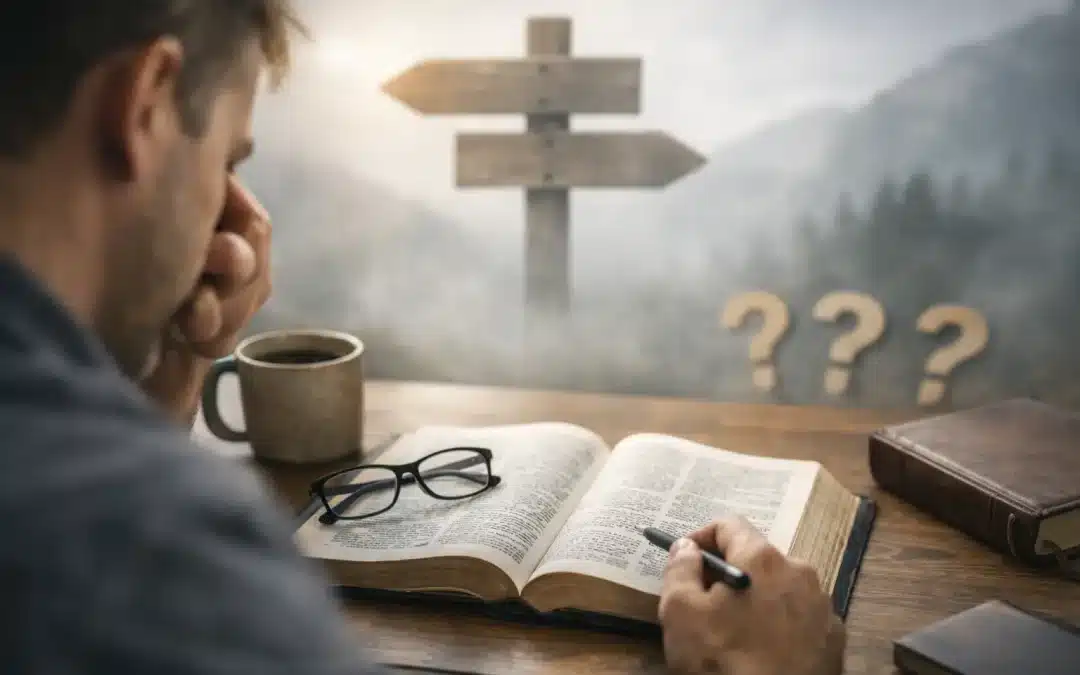
Have you ever opened the Bible and felt confused?
We are all going to see unfamiliar names, ancient customs, or phrases that may seem hard to understand. That can feel discouraging, especially when you really want to understand what you are reading.
But look at it this way: confusion can also lead you to slow down and learn.
The Bible was written across many years, in real places, for real people. Its pages include poetry, history, letters, songs, and stories.
When you read slowly and ask good questions, the message can become clearer. It also helps to look up the questions you may have.
And one more thing: why not read from a translation that is easy to understand?
You are reading an ancient world
Bible events happened in places with deserts, hills, fishing towns, and busy roads.
People traveled on foot. They planted crops by season. Family life, work, worship, and government looked different from life today.
That cultural and historical distance can perhaps make a passage feel strange at first.
You can learn the setting by pausing over simple details.
Ask where the story happened. Ask who heard the message. Ask what was happening around them.
Jesus used images people saw in daily life, such as seeds, sheep, and fishing nets. The first listeners understood these objects because they were common in the world around them.
You can understand them too when you take time to learn about the passage.
You may need the wider passage
It’s best to read more than a single verse. Read the paragraph before it and the paragraph after it. Then look at the chapter’s main thought.
Paul wrote letters to churches facing real struggles. A sentence from one of his letters may answer a problem that was already being discussed. Reading the wider section helps you hear his care, purpose, and call to faith.
Take it one page at a time.
Notice the kind of writing
A Psalm reads differently from a letter. They are different types of writing.
Proverbs gives wise guidance in short sayings. Acts tells the story of the early church as the Gospel moved across borders and cultures.
When a passage feels confusing, ask what kind of writing you are reading.
Poetry uses pictures and feeling.
Parables emphasize a lesson.
History tells what happened.
Letters teach and encourage people facing daily choices.
This helps you listen to the passage with more care.
A simple way to read when you feel stuck
Begin with a small section. Read once for the main idea. Read again and notice a word, action, or question that stands out.
Then you can look up questions you may have on a reliable website or in a reliable book.
Then you might ask yourself questions about the passage:
What does this show?
What is an accurate way to interpret this passage?
How can I respond today?
Prayer can also be part of your reading. Before you begin, ask God to help you pay attention.
When a verse brings comfort or correction, talk with God about it.
Here is a short prayer:
Dear God, help my heart receive what You want to teach me today. Give me patience when a passage feels hard. Help me know You more and follow Jesus with joy. Amen.
Let hard passages teach you patience
Some sections need more time.
Genealogies, temple details, and prophetic visions can feel far from your daily routine. Slow down. Read a clear section alongside a harder one. Return later with fresh attention.
Reading with other believers can help too. A trusted pastor, Bible study group, or mature Christian friend may notice something you missed or share knowledge that helps you understand the passage.
Good teaching can help you see Jesus more clearly and live with greater love.
Let what you read and understand shape how you speak, work, and serve.
Scripture can lead you closer to Jesus, even when the first reading feels hard.