
When you read Romans, Philippians, or Galatians, you are reading real letters sent to real people in real places.
Paul was writing to believers in cities and regions with their own pressures, customs, and struggles.
One simple way to approach these letters is to ask: Where were these people living?
Start with the place
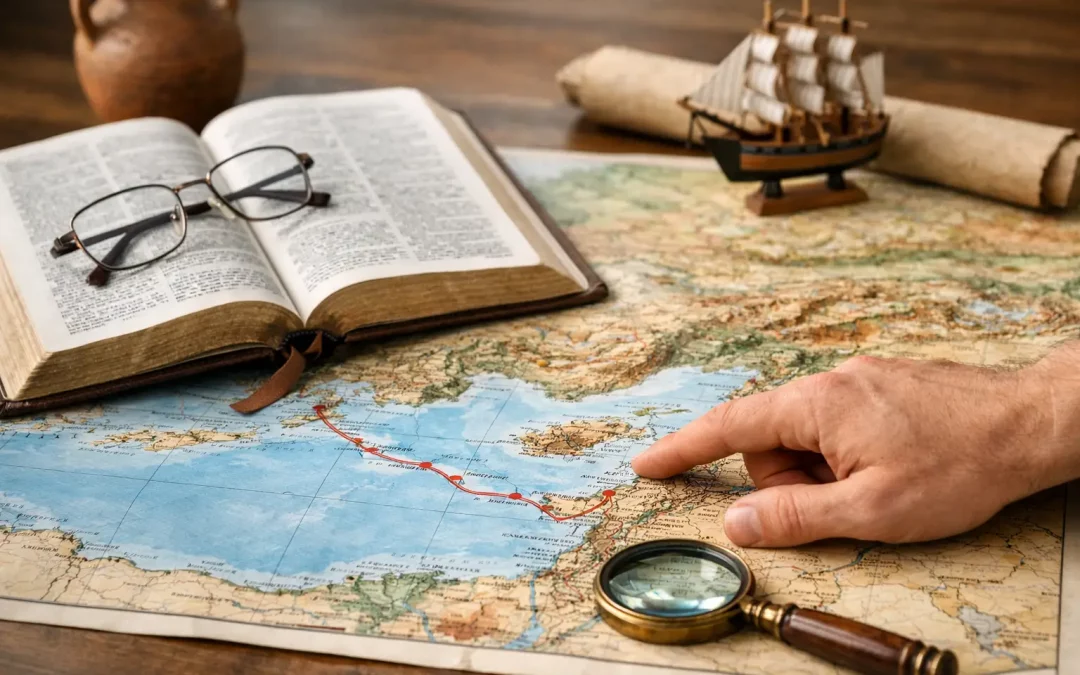
Before reading one of Paul’s letters, think a bit about the location and try to locate it on a map.
Where was Philippi?
Where was Ephesus?
Where was Galatia?
You do not need to become an expert in ancient history. Just knowing the basic setting can help.
Philippi was a Roman colony. That can make Paul’s words about citizenship feel more concrete.
Ephesus was a major city where religion, money, and public life were deeply connected. That can help you understand why spiritual conflict and unity matter so much in Ephesians.
Galatia was a region, not just one city. So, when Paul writes to the Galatians, you might picture groups of Christians spread across a large region.
Read Acts beside the letters
Acts is one of the best places to begin.
When you read one of Paul’s letters, look for the related city or region in Acts. You may see when Paul first arrived, who he met, or what kind of opposition the church faced.
That can make the letter feel more grounded.
In Philippi, you see Lydia, a jailer, and a new church beginning.
In Ephesus, you see public unrest tied to religion and business.
In Thessalonica, you see opposition almost immediately.
Those details help you remember that Paul was writing to people with real problems.
And they had learned and experienced the Gospel in a particular place.
They were trying to follow Christ there.
Notice roads, ports, and regions
A city’s location shaped daily life.
Port cities brought travelers, trade, and outside ideas.
Major roads helped news spread.
Roman power shaped public life.
Corinth is a good example. Its location made it busy and influential. That helps explain why the church wrestled with status, public behavior, and witness.
Colossae was inland, near other towns, in a region where different ideas mixed together.
You do not need every map detail, but a basic look at Paul’s missionary routes can help you see how these places connected.
Just ask: What kind of place was this?
That question can help you think about the text in a different way.
Let the setting help you hear the letter
The truth of Scripture does not change because of geography.
But geography can help you hear the letter more like the first readers did.
For example, Paul’s words to the Ephesians about standing firm feel stronger when you remember the spiritual climate around them. It can help you understand the message more clearly.
Start simple.
Ask three questions:
Where was this church?
What kind of place was it?
What does Acts show about how the church began?
That is enough to make a difference.
And remember: keep the main thing the main thing. When reading Scripture, think about how your relationship with God can develop and how you can be more obedient to God.
A simple way to begin
Choose one of Paul’s letters and read the opening lines.
Find the city or region on a map online or in your Bible.
Then look up passages in Acts that relate to that city or region.
After that, ask how the location may shape the problems and encouragement in the letter.
The people may become easier to picture. The teaching may become easier to understand. And the letter may feel less distant.
These were believers trying to follow Christ in public places, under pressure, and among competing voices.
Their settings were different from yours, but their need for grace was the same.