

A guide to Paul’s missionary routes helps turn familiar Bible passages into real roads, real cities, and real people. When those journeys come into focus, Acts reads differently. Paul’s letters do too. You begin to see not only where Apostle Paul went, but why those places mattered for the spread of the gospel.
Have you ever read Acts and wondered how all those cities fit together?
Paul did not travel at random. His routes followed the main lines of the Roman world. He moved through ports, trade roads, and regional centers where news traveled fast. The message of Jesus spread through ordinary human pathways.
A guide to Paul’s missionary routes starts with the map
If the names feel hard to track, it helps to picture three broad regions. Apostle Paul traveled through parts of Cyprus, modern Turkey, Greece, and eventually Italy. Many readers know the journeys by number – first, second, and third missionary journeys – but the real value comes from seeing the pattern.
He often began in a city with a synagogue, preached there first, then stayed where people responded. From there, he formed communities, encouraged believers, and returned to strengthen them later. In other words, these routes were not just about movement. They were about discipleship.
Acts records a mission that grew under pressure. Some cities welcomed Paul. Others pushed him out. Here’s a picture of John Christopher Frame at Lystra–an ancient city where Paul was violently forced out of the city.
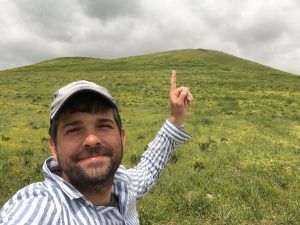
The routes Paul took show courage, but they also show flexibility. Sometimes Paul stayed for a long season. Other times he left quickly to protect the new believers or to avoid a riot.
The first journey – planting the first churches
The first missionary journey begins in Antioch of Syria, a major center for early Christian mission. From there, Paul and Barnabas traveled to Cyprus, then crossed into Asia Minor, in what is now Turkey. They moved through places such as Perga, Pisidian Antioch, Iconium, Lystra, and Derbe.
This journey has a frontier feel. The gospel was moving into new regions, and every stop involved risk. In Pisidian Antioch, Paul preached in the synagogue and saw both interest and opposition. In Lystra, the crowd first treated Paul and Barnabas like gods, then turned violent. That shift says a lot about ministry in the ancient world. Response could change fast.
Still, the first journey was not a failure marked by hardship. It was the beginning of stable local churches. On the return trip, Paul and Barnabas revisited the same towns to strengthen disciples and appoint leaders. That detail matters. Apostle Paul was not chasing numbers. He was building durable communities of faith.
For a reader today, the first journey offers a simple lesson. New ministry often looks messy at the start. There can be openness, confusion, and resistance all at once. Yet the Lord still establishes His people.
Guide to Paul’s missionary routes on the second journey
The second journey begins after Paul and Barnabas part ways. Paul then travels with Silas, and later Timothy joins them. This route revisits churches from the first journey, but it also breaks into new territory. That is when the mission pushes west into Macedonia and Greece.
This section of Acts includes some of the best-known places in Paul’s story. Philippi stands out because it was a Roman colony and the site of Paul’s imprisonment. Thessalonica became another key stop, with a new church formed amid sharp opposition. Berea is remembered for people who examined the Scriptures carefully. Then came Athens and Corinth, two cities with very different personalities.
Athens represented ideas, debate, and public philosophy. Corinth was a busy commercial city known for wealth, movement, and moral pressure. Paul adjusted his approach, but he did not change the message. That’s one of the clearest lessons from the second journey. Faithfulness is not the same as sameness. The gospel stayed true while Paul spoke to different audiences in wise ways.
The vision of the man from Macedonia also gives this journey special weight. Paul saw that the Lord was directing the mission across the Aegean Sea.
That can encourage anyone who feels uncertain about next steps. The map matters, but the Lord leads the mission more than the missionary does.
The third journey – strengthening what had begun
The third missionary journey is less about first contact and more about deepening the work. Paul traveled again through Galatia and Phrygia, strengthening disciples, then spent a long season in Ephesus. From there the gospel reached across the wider region.
Ephesus deserves special attention in any guide to Paul’s missionary routes. It was one of the most important cities Paul visited. It had trade, religion, and influence. A long stay there meant the message could spread outward through networks of work, travel, and daily life.
Acts shows both fruitful ministry and fierce spiritual conflict in Ephesus. There were changed lives, public repentance, and growing tension with those whose income depended on idolatry. Geography and discipleship meet again here. A strategic city can multiply the reach of the gospel, but it can also expose the idols of a culture.
After Ephesus, Paul traveled through Macedonia and Greece again, encouraging believers before returning toward Jerusalem. This part of the story feels more pastoral. Paul knew trials were ahead. His words to church leaders carried urgency and affection.
That gives the third journey a different tone. It is not only expansion. It is care, warning, and endurance.
Why these routes matter for reading Acts and the letters
Knowing Paul’s routes helps connect the story in Acts with the letters in the New Testament. Philippians makes more sense when Philippi becomes a real Roman colony. First and Second Corinthians become more vivid when Corinth is seen as a restless port city. Ephesians carries added depth when Ephesus is understood as a center of spiritual and civic power.
This is where geography serves devotion. It reminds readers that the gospel entered actual neighborhoods and public squares. The people in these churches were not abstract names. They lived in households, worked in markets, and faced local pressure.
That can steady faith today. Christian discipleship still happens in real settings – offices, homes, and communities. The Lord still meets people in the middle of daily life.
A few simple patterns to notice on Paul’s journeys
As you read through these routes, three patterns stand out. Apostle Paul usually went where people gathered, stayed long enough to teach, and returned when possible to strengthen believers. That rhythm helps explain both Acts and the letters.
It also keeps the focus where it belongs. Paul was not simply a traveler. He was a servant sent to make disciples and form churches. Travel was part of the calling, not the center of it.
There is also a healthy tension in the story. Some readers want a neat map with every stop pinned down. That can help, but not every detail is equally clear. Ancient travel involved weather, politics, and human limits. A route on paper can look tidy. The real journey never was.
That trade-off is worth remembering. Maps bring clarity, but they can also flatten the hardship. When reading Acts, it helps to hold both together – the route itself and the cost of walking it.
How to use this guide to Paul’s missionary routes in your Bible reading
Start with Acts 13 through Acts 21 and read slowly. Keep a simple map nearby if that helps, but let the text lead. Watch for repeated cities. Notice when Paul returns to a church. Pay attention to what changes from one region to another.
Then connect those places to the letters. Read Philippians after Philippi. Read First Corinthians with Corinth in mind. Read Ephesians while remembering Paul’s long ministry there. That simple habit can make the New Testament feel more connected and more alive.
For group study, this topic works well because it gives people something concrete to follow. It can help newer Bible readers who feel lost in names and places. It can also encourage mature believers who want Scripture to feel less distant.
If biblical geography has ever felt intimidating, take heart. You do not need to memorize every road or harbor. Just begin with the main movements and let the story unfold.
Apostle Paul crossed seas, cities, and borders, but the heart of the mission never changed. Christ was being proclaimed, churches were being formed, and believers were being strengthened. That same Lord still guides His people step by step, even when the road ahead is not fully mapped.