
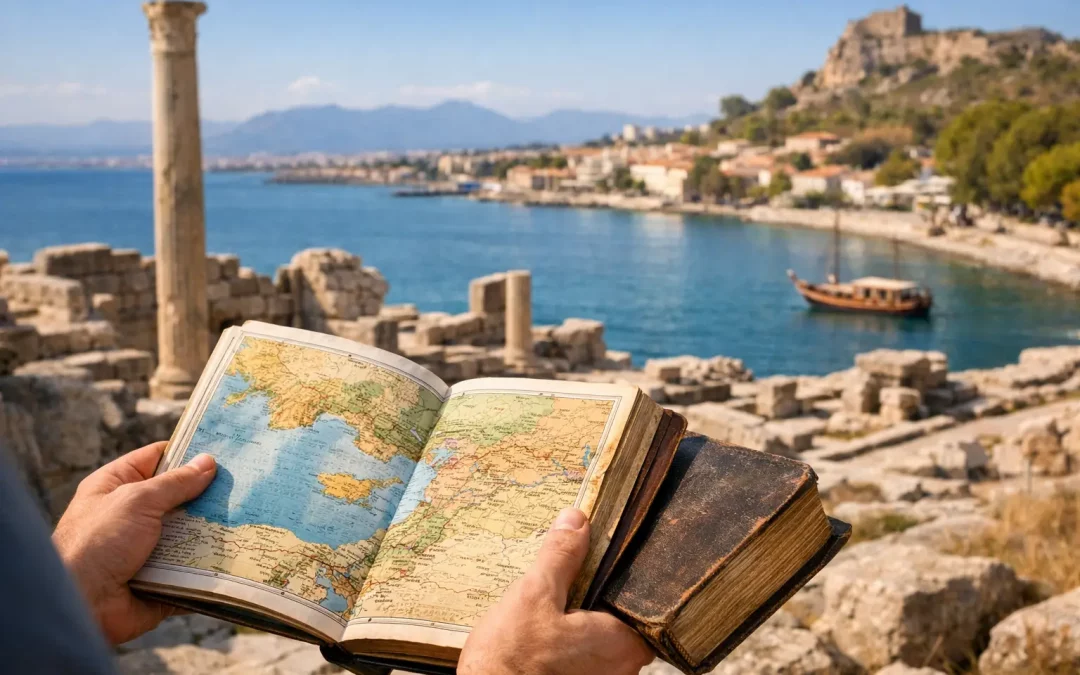
Have you ever read Acts and wished the cities felt a little less like names on a page and a little more like real places? A Bible places quiz can do more than test memory. It can help Scripture feel grounded, lived-in, and easier to remember.
For some Christians, biblical geography sounds like extra detail that belongs in a study Bible map section. But once those places begin to connect, the story changes. For example, Ephesus starts to feel like a real center of influence, and the journeys of Paul begin to show courage and history in a more vivid way.
That is why a simple quiz can be so helpful. It turns passive reading into active attention. Instead of skimming over place names, readers begin asking better questions. Where did this happen? Why there? What was happening in that region? How did travel shape the spread of the gospel?
Why a Bible places quiz matters
The events of Scripture happened in real settings among real people facing real pressures. When those settings come into focus, the message often does too.
That does not mean every Christian needs to become a geography expert. It does mean that knowing a few key places can strengthen Bible reading in practical ways. It helps readers follow the flow of Acts. It helps letters in the New Testament feel connected to living communities.
There is also a memory benefit. Many people remember what they can picture. A quiz creates a mental hook. Once a place is tied to an event, a person, or a challenge in the early church, it often stays there longer. That kind of learning is simple, but it is powerful.
And there is a spiritual benefit too. When Scripture feels more concrete, it often feels more personal. The distance between then and now shrinks. The reader is not just hearing that the gospel spread. The reader begins to see that it spread from city to city through hardship, obedience, and the leading of the Holy Spirit.
What a good Bible places quiz can teach
Not every quiz does the same job. Some are only about trivia. That can be fun, but it has limits. A stronger Bible places quiz helps readers connect places with meaning.
For example, if a quiz includes cities from Paul’s journeys, it can help readers see aspects of the Bible they were unaware of.
Click the image to take the quiz.
Paul preached in places filled with tension, commerce, and spiritual confusion. In that sense, those cities do not feel so far from modern life.
A good quiz also helps readers connect different parts of the New Testament. If someone recognizes Ephesus, then the book of Acts and the letter to the Ephesians begin to feel more connected. If someone remembers Philippi, then Paul’s experience there gives extra depth to Philippians. Geography becomes a bridge to understanding.
That is one reason biblical learning tied to real locations can be so fruitful. It keeps the reader from treating Scripture like isolated scenes. Instead, the Bible starts to feel like a connected story unfolding across real regions and real journeys.
Paul’s journeys become easier to follow
One of the biggest challenges in Acts is keeping the movement straight. Paul travels often. He revisits places. He faces different responses in each city. Without some sense of location, the story can blur together.
This is where travel context can be especially helpful. When readers understand that many of these places are not imaginary but actual sites in modern-day Turkey and beyond, the text gains texture. Ancient roads, coastal routes, public squares, and Roman influence all become part of the background. The mission of the church starts to look less abstract and more embodied.
The spiritual value goes beyond trivia
A reflective question can help here: what happens when Scripture moves from familiar to vivid?
Often, attention deepens. Gratitude grows. Prayer becomes more specific. The reader sees that the good news traveled through ordinary places filled with ordinary needs. That reminder can strengthen courage today.
Paul and the early believers did not carry the message only in safe and easy settings. They walked into unfamiliar cities, spoke to skeptical crowds, endured opposition, and kept going. Reading those accounts with a clearer sense of place can sharpen faith in a fresh way.
That command was lived out on roads and in cities with names many readers skip over. A Bible places quiz can help those names matter again.
Bible places quiz and everyday discipleship
Many biblical cities were full of spiritual confusion, economic struggle, and social division. The early church carried hope into those places. Christians still do the same today.
Learning the geography of Acts can become a reminder that the message of Christ has always moved outward. It has always crossed borders, languages, and fears.
Readers who enjoy this kind of Bible engagement may also appreciate resources from John Christopher Frame that connect faith, biblical context, and practical encouragement for daily life.
When simple learning opens deeper wonder
A Bible places quiz is simple by design. That is part of its strength. It does not ask for a seminary background. It simply asks the reader to pay attention, to remember, and to see the biblical world with clearer eyes.
And sometimes that is all it takes. One city name becomes familiar. One journey starts to make sense. One chapter in Acts feels alive in a new way. The map is no longer an extra page at the back of the Bible. It becomes part of the story of how the gospel moved through the world.
The next time a city name appears in Acts, pause for a moment. That place mattered then, and understanding it may shape how the passage speaks today.