
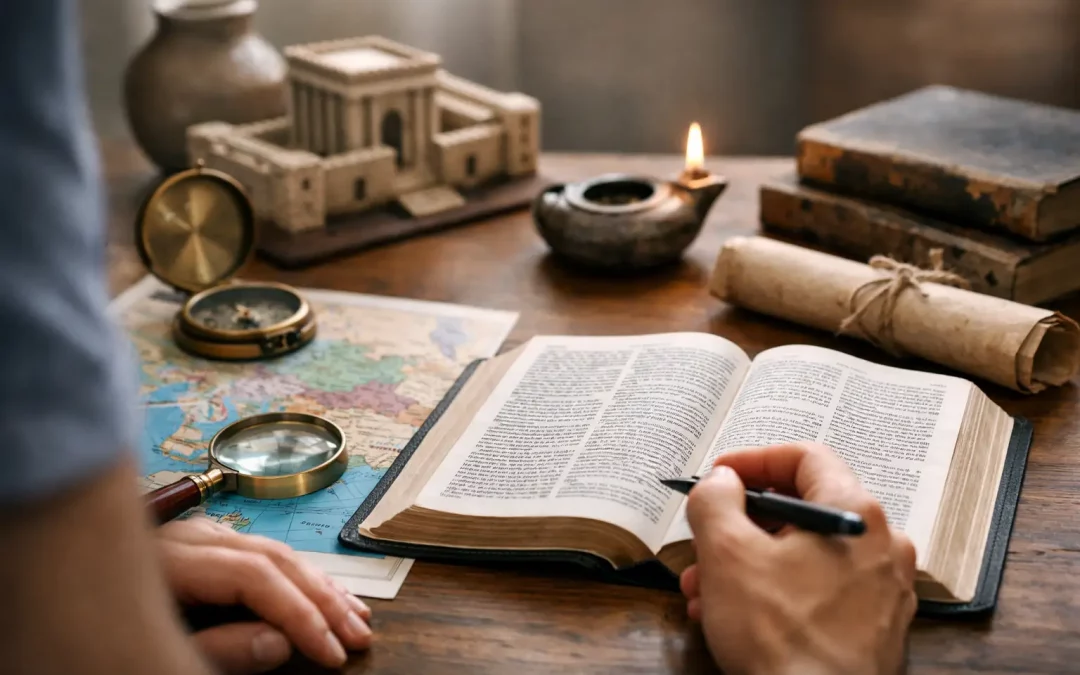
Acts moves fast.
Cities. Crowds. Journeys.
The gospel crosses borders. If Acts is read like a loose set of stories, key details get missed. If it is read in context, the book becomes clearer, richer, and more personal.
Acts is not just a record of events. It shows how the risen Jesus worked through real people in real places. Jerusalem was not Antioch. Philippi was not Ephesus. A synagogue setting was not the same as a Roman court. Context helps each scene make sense.
What it means to study Acts contextually
To study Acts contextually means reading each passage with its setting in view. That includes the people, the city, and the moment in the story. It asks simple questions. Who is speaking? Where are they? What just happened? Why does this response make sense here?
This matters because Acts includes travel, speeches, trials, miracles, and church growth across many regions. The same message is preached, but the setting changes the way people hear it. Apostle Paul spoke one way in a synagogue and another way in a pagan city. The truth stayed the same, but the audience was different.
A contextual reading also guards against rushed application. Not every event in Acts is a pattern for every church in every moment. Many passages describe what happened. They do not always command what must happen next. That does not make them less valuable. It simply means careful reading leads to wiser application.
Start with the flow of the whole book
Before focusing on one chapter, get the big picture. Acts begins in Jerusalem, then expands through Judea and Samaria, then moves farther out through the Roman world. That movement shapes the whole book. The spread of the gospel is not random. It follows a clear path.
When reading a passage, ask where it falls in that larger story.
This wider view also helps with repeated themes. Prayer, witness, suffering, and the Holy Spirit keep appearing. Seeing those themes across the whole book helps a single passage feel less isolated.
Read the passage in its local setting
Once the big picture is clear, narrow the focus. Read the section before and after the passage.
Acts works like a chain. One event leads to another.
This is also where details matter. Watch names, travel notes, and repeated words. Luke includes these for a reason. They show movement, tension, and purpose.
Pay attention to geography
If Acts feels hard to follow, geography may be the missing piece. Cities in Acts are not background decoration. They shape what happens. Port cities, Roman colonies, and trade centers each carry a different feel.
Ephesus was known for the temple of Artemis. That sheds light on the anger around idol trade in Acts 19. Athens prized ideas and debate, which helps explain the tone of Apostle Paul’s speech on Mars Hill.
Knowing where a place sits can also show why travel mattered, and biblical geography can deepen Bible reading.
Learn the people in the passage
Acts includes apostles, rulers, merchants, soldiers, widows, jailers, and travelers. Each person enters the story with a history and a social setting. That does not mean every detail can be known. It means the role of the person in that scene matters.
A Pharisee hears a message differently than a Roman governor. A synagogue leader responds differently than a city crowd. A jailer in Philippi has different concerns than a silversmith in Ephesus. Reading with that in mind keeps the passage grounded.
One short line can open up a whole scene. As Jesus gave His mission, He said, “You will be my witnesses in Jerusalem, in all Judea, in Samaria, and in every part of the world” (Acts 1:8). That verse frames the people and places that follow. Witness moves outward, and each new group brings fresh questions.
How to study Acts contextually without getting lost
A simple method works best. Read one passage at a time and ask three questions: What is happening, where is it happening, and why does that setting matter? That keeps study clear and focused.
Then look at what the passage reveals about God’s work. Acts is not a travel diary alone. It shows the power of the gospel, the work of the Holy Spirit, and the growth of the church under pressure. Context helps explain the scene, but the main point still centers on Christ and His mission.
After that, move to application with care. Ask what truth is timeless and what detail is tied to that moment. A prison escape is not a promise that every believer will be freed from suffering. But it does show that God is present, active, and worthy of trust in suffering.
You can also spend some time exploring verses with a book on the topic, or online, to learn about the geography or historical context of Acts.
Watch for moments where context changes the meaning
Acts has several passages where context keeps readers from taking a wrong turn. Pentecost is one example. It is a real event, but it is also a key moment in redemptive history. Reading it well means seeing both the wonder of the event and its place in the larger story.
The Jerusalem Council in Acts 15 is another example. That chapter is not just a debate about customs. It addresses whether Gentiles must take on Jewish identity markers to belong fully among God’s people. That context makes the chapter far more than a church meeting.
Apostle Paul’s speeches also need context. In a synagogue, he starts with Israel’s history. In Athens, he starts with creation and the altar to an unknown god. The message about Jesus remains central, but the starting point changes because the audience changes.
Let Acts shape both mind and heart
Context is not a dry exercise. It helps readers see the courage of the early church with fresh eyes. It shows the cost of witness. It shows the kindness of God in moving the gospel across languages and lands.
That kind of reading can stir prayer. It can deepen compassion for the nations. It can make the church feel bigger than one town or one tradition. John Christopher Frame’s work around biblical geography points in that same direction, helping readers see that the world of the Bible was real and is interesting to learn about.
Here is one reflective question: What part of Acts feels new when the people and places become real?
A simple rhythm for your next study
Next time Acts is open, slow down a little. Read a chapter once for flow. Read it again for setting. Then note how the place, the people, and the pressure shape the message. That rhythm keeps study simple and meaningful.
Acts was written to strengthen faith, not just fill the mind. Read it with care, and the book will start to feel less flat. The roads, the courts, and the crowded streets begin to matter. And in those details, the living Christ is still calling His people to faithful witness.