
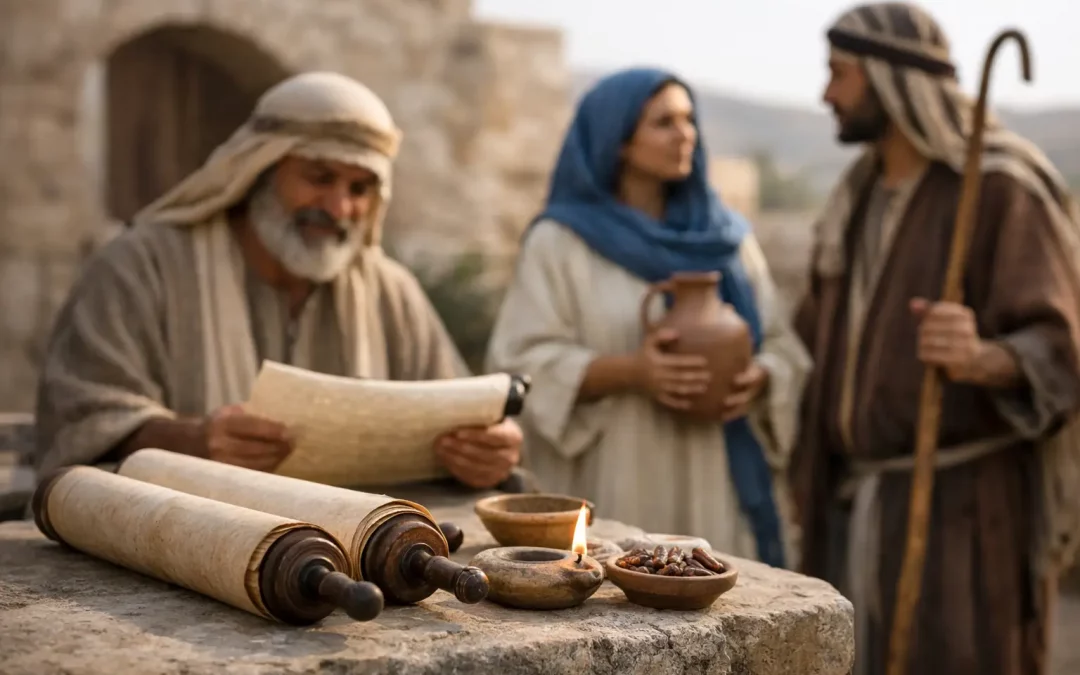
Customs and culture in Bible times may feel quite different from what you’re used to.
A wedding feast lasts for days. Someone tears his clothes after hearing terrible news. People share meals in ways that carry more meaning than we might notice at first.
Learning a little about those customs can help you read with more care.
Why biblical customs matter
The Bible was written across many years in places far from modern America.
Daily life looked different. Homes, jobs, meals, worship, travel, and family responsibilities often followed patterns that may not be familiar to us.
When Jesus welcomed children, He gave attention to people who did not have much public status. When He ate with tax collectors, people noticed. When Paul used the picture of running a race, many readers would have understood the discipline of an athlete.
Cultural background can help you better understand the setting and meaning.
Honor and shame shaped public life
Honor mattered deeply in many biblical settings.
A person’s actions could affect a family’s name and standing in the community. This helps us understand why public welcome, rejection, praise, and shame can carry so much weight in Bible stories.
In the parable of the prodigal son, the father’s welcome is powerful. The son had brought shame on the family. Yet the father ran to meet him, embraced him, and restored him. The father showed costly mercy.
As you read, notice when someone is welcomed, pushed aside, praised, or shamed. Those moments may help you see the courage, mercy, or humility in the story more clearly.
Hospitality carried deep meaning
Sharing food was often more than eating together.
It could show welcome, friendship, peace, and care. A host had responsibilities toward a guest. A shared meal could also make a public statement about relationship.
This gives added meaning to meals in the Gospels.
Jesus ate with people others avoided. These meals showed something about His kingdom and the kind of people He came to welcome.
When you see a meal in Scripture, ask what the meal shows about the people at the table.
Who is welcomed? Who is uncomfortable? What does Jesus do?
Family and community came first
Many people in the biblical world lived with close ties to parents, children, relatives, and the wider community.
A decision about marriage, work, faith, or money could affect more than one person. It could affect the household.
That can help us read stories with more understanding.
Ruth’s care for Naomi shows loyal love within a family relationship. Joseph’s brothers show how jealousy can damage a household. The early church used family language, calling believers brothers and sisters in Christ. Following Jesus formed a new community marked by love, service, and shared hope.
Work happened close to the land
Fishing, farming, and shepherding were part of daily life in many biblical lands.
Weather, harvests, animals, and travel conditions mattered. A poor catch or failed crop could bring real hardship.
Jesus used pictures people knew.
Seeds fell on different soils. A shepherd searched for a lost sheep. A woman searched for a lost coin. Workers waited to be hired. Fishermen pulled nets from the water.
These details help parables feel less distant.
They also remind us that God meets people in ordinary work, family needs, and daily concerns.
Worship shaped community life
The temple in Jerusalem was central to Jewish worship. Pilgrims traveled there for major feasts. Sacrifices, prayers, songs, and teaching were part of the life of God’s people.
Synagogues also mattered in local communities.
Jesus taught in synagogues. Paul often began his ministry in a city by going to the synagogue. These were places where people heard Scripture and learned together.
The first followers of Jesus lived within this Jewish setting. As the Gospel spread, believers learned how to follow Jesus across cultures.
Acts shows some of those questions clearly. The church prayed, listened, debated, and sought unity as Gentiles came to faith.
Learn without forcing the details
When you read a passage that has a custom you’re unfamiliar with, consider who is speaking, where the scene takes place, and what problem is in front of the people.
But the Bible spans many generations. The Old Testament world was not exactly the same as the New Testament world. Roman rule also brought new pressures during the time of Jesus and the early church.
Read the passage first. Then look up questions you have to help you understand it better.
Let cultural learning shape how you live
Biblical customs can enrich a story and your understanding of it.
You may better understand the risk of a woman reaching for healing in a crowd. You may feel the surprise of a Samaritan stopping to help a wounded man. You may notice the generosity behind a widow’s small gift.
That clearer picture should lead somewhere.
Read the Bible with patience. Welcome people with care. Notice those who may be overlooked. Let Scripture grow your compassion for people whose lives look different from yours.
This is part of practical discipleship. Learning more about the Bible should help you follow Jesus more faithfully in ordinary life.
The goal is not just to know more customs.
The goal is to understand Scripture more clearly and let God shape how you live.